

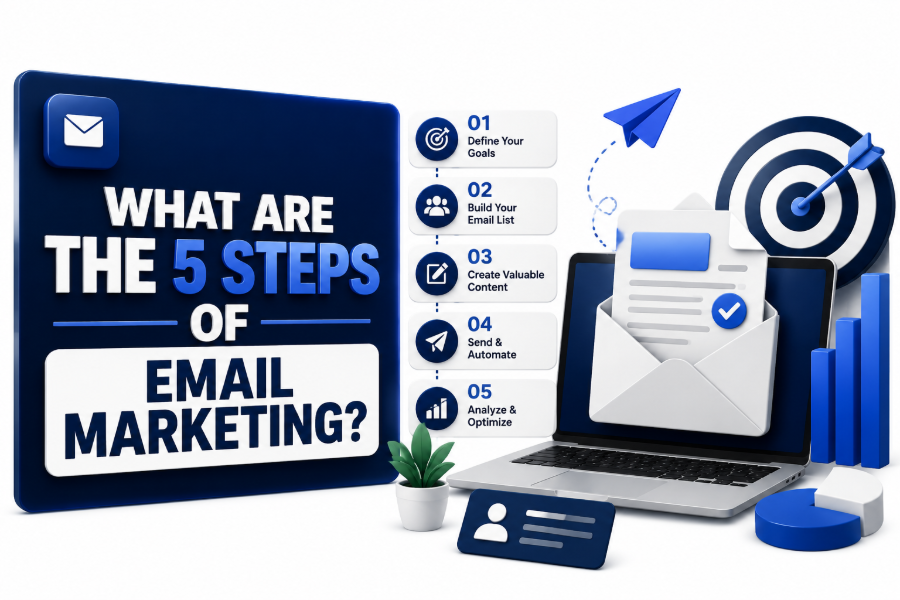
Email marketing remains one of the most effective digital marketing strategies for businesses of all sizes. Even with the growth of social media and other communication channels, email continues to provide a direct way to connect with customers, build relationships, and encourage repeat engagement.
However, successful email marketing does not happen by simply sending promotional messages to a large list of contacts. Businesses need a structured approach that includes planning, audience research, content creation, campaign execution, and performance analysis.
Many marketers follow a simple process to create effective email campaigns. These steps help businesses deliver valuable messages, improve customer relationships, and achieve better marketing results.
What are the 5 steps of email marketing can help beginners and experienced marketers create campaigns that are organized, targeted, and focused on long-term growth.
The Importance of Email Marketing
Email marketing is a digital communication strategy where businesses send emails to subscribers, customers, or potential customers. These emails can include promotions, newsletters, product updates, educational content, and personalized offers.
Unlike many social media platforms where businesses depend on changing algorithms, email allows companies to communicate directly with their audience. A well-managed email list becomes a valuable marketing asset because businesses can reach interested users without relying entirely on paid advertising.
Email marketing helps businesses achieve several goals, including:
- Building customer relationships.
- Increasing brand awareness.
- Driving website traffic.
- Promoting products and services.
- Improving customer retention.
A successful email strategy focuses on delivering the right message to the right audience at the right time.
The First Step: Defining Email Marketing Goals
The first step in email marketing is creating clear and measurable goals. Before sending any campaign, businesses need to understand what they want to achieve through email communication.
A campaign without a specific goal can become ineffective because there is no clear direction for creating content, choosing audiences, or measuring success.
Different businesses may have different email marketing objectives. An online store may focus on increasing sales, while a service company may want to generate leads or educate potential customers.
Common email marketing goals include:
- Increasing product sales.
- Growing website visitors.
- Generating qualified leads.
- Improving customer loyalty.
- Promoting special offers.
Clear goals help marketers create campaigns that support overall business objectives and provide measurable results.
Creating a Strategy Based on Audience Needs
After defining goals, businesses need a strategy that explains how email campaigns will reach those objectives. A strong email strategy considers the target audience, content type, sending frequency, and overall communication style.
Understanding customer needs is essential because people are more likely to engage with emails that provide useful information rather than constant promotional messages.
Marketers should identify:
- Who the target audience is.
- What problems customers face.
- What type of content they prefer.
- How often they want communication.
A thoughtful strategy creates a better experience for subscribers and increases the chances of higher engagement.
The Second Step: Building and Managing an Email List
Building an email list is the second important step in email marketing. A quality email list contains people who have shown interest in a brand and have given permission to receive communications.
Buying random email lists may create problems because those contacts may not be interested in the business. A successful strategy focuses on attracting subscribers naturally through valuable offers and content.
Businesses can build email lists through:
- Website signup forms.
- Free resources or downloads.
- Newsletter subscriptions.
- Special discounts.
- Online registrations.
- Social media promotions.
A strong email list improves campaign performance because messages are sent to people who already have some level of interest.
Using Segmentation to Improve Email Performance
Email segmentation allows businesses to divide subscribers into smaller groups based on different characteristics. Instead of sending the same message to everyone, marketers can create more personalized campaigns.
Segmentation improves relevance because different customers may have different interests, buying behaviors, or needs.
Common segmentation methods include:
- Customer location.
- Purchase history.
- Website activity.
- Engagement level.
- Customer preferences.
For example, a clothing brand can send different emails to customers interested in men’s, women’s, or seasonal products.
Personalized emails often create stronger connections and better engagement compared to general messages.
The Third Step: Creating Valuable Email Content
Content creation is one of the most important steps in email marketing. A successful email should provide value while encouraging subscribers to take a desired action.
Good email content should be clear, engaging, and relevant to the audience. Businesses should avoid creating emails that only focus on selling because subscribers may lose interest over time.
Effective email content often includes:
- Helpful information.
- Product updates.
- Exclusive offers.
- Customer stories.
- Educational resources.
- Personalized recommendations.
The subject line, opening message, visuals, and call-to-action all influence whether subscribers interact with the email.
Writing Effective Subject Lines and Calls-to-Action
The subject line is the first thing subscribers see when receiving an email. A strong subject line can increase open rates by creating curiosity and clearly communicating value.
A good subject line should be short, relevant, and connected to the email content. Misleading subject lines may increase opens temporarily but can damage trust.
The call-to-action tells readers what action they should take after reading the email. Whether it is visiting a website, downloading a resource, or making a purchase, the CTA should be simple and clear.
Examples of effective CTA styles include:
- Shop the latest collection.
- Download your free guide.
- Learn more about our service.
- Claim your offer.
Strong messaging improves user engagement and campaign effectiveness.
The Fourth Step: Sending and Managing Email Campaigns
Once the email content is ready, the next step is sending the campaign. Businesses use email marketing platforms to organize subscribers, design emails, schedule messages, and monitor performance.
Choosing the right timing is important because sending emails too frequently may annoy subscribers, while sending them too rarely can reduce engagement.
Email automation can also improve efficiency by sending messages automatically based on user actions.
Common automated email campaigns include:
- Welcome emails.
- Abandoned cart reminders.
- Customer follow-ups.
- Birthday offers.
- Product recommendations.
Automation helps businesses maintain communication while saving time and resources.
Choosing the Right Email Marketing Tools
Email marketing platforms provide the technology needed to create and manage campaigns. These tools offer features such as templates, automation, analytics, segmentation, and subscriber management.
Popular email marketing tools help businesses handle campaigns more efficiently and improve overall performance.
Important features to consider include:
- Easy email design options.
- Automation capabilities.
- Reporting tools.
- Contact management.
- Integration options.
Choosing the right platform depends on business size, marketing goals, budget, and campaign requirements.
For businesses expanding their digital strategy, combining email campaigns with other channels such as [social media marketing strategies] can create a stronger customer communication system.
The Fifth Step: Measuring Results and Improving Campaigns
The final step in email marketing is analyzing performance and improving future campaigns. Tracking results helps marketers understand what works and what needs adjustment.
Without measurement, businesses cannot know whether their emails are achieving their goals.
Important email marketing metrics include:
- Open rate.
- Click-through rate.
- Conversion rate.
- Bounce rate.
- Unsubscribe rate.
- Revenue generated.
Analyzing these metrics helps marketers improve subject lines, content quality, audience targeting, and sending schedules.
Successful email marketing requires continuous testing and improvement.
Testing Different Email Strategies
Testing helps businesses discover which email elements perform best. Marketers often use A/B testing to compare different versions of an email and identify better-performing options.
Small changes can create significant improvements in campaign results. Testing allows businesses to make decisions based on actual audience behavior.
Common elements to test include:
- Subject lines.
- Email designs.
- Images.
- Call-to-action buttons.
- Sending times.
- Content length.
Regular testing helps create more effective campaigns and improves overall marketing performance.
Building Long-Term Relationships Through Email
Email marketing is not only about increasing immediate sales. It is also about building lasting relationships with customers.
Businesses that consistently provide useful content can create trust and encourage customer loyalty. Subscribers are more likely to engage with brands that understand their interests and provide meaningful value.
A successful long-term email strategy focuses on:
- Consistent communication.
- Personalized experiences.
- Helpful content.
- Customer feedback.
- Relationship building.
Strong relationships often lead to repeat purchases and increased brand loyalty.
Common Email Marketing Mistakes to Avoid
Many businesses struggle with email marketing because they focus too much on promotion and not enough on customer value. Sending too many sales emails can reduce engagement and increase unsubscribes.
Another common mistake is ignoring personalization. Modern customers expect relevant communication instead of generic messages.
Common mistakes include:
- Sending emails without permission.
- Using unclear subject lines.
- Ignoring mobile users.
- Sending too frequently.
- Not analyzing results.
Avoiding these mistakes helps businesses create better campaigns and maintain subscriber trust.
Conclusion
What are the 5 steps of email marketing helps businesses create a structured approach to building successful campaigns. The process includes setting clear goals, building an audience, creating valuable content, sending campaigns effectively, and measuring results.
Email marketing works best when businesses focus on customer needs, personalization, and continuous improvement. By following these steps, companies can build stronger relationships, increase engagement, and achieve better marketing outcomes over time.
FAQ’S
What is the first step of email marketing?
The first step of email marketing is defining clear goals. Businesses need to understand what they want to achieve, such as increasing sales, generating leads, improving engagement, or building customer relationships.
Why is email list building important?
Email list building is important because it allows businesses to communicate with interested audiences. A quality subscriber list improves engagement and helps companies send messages to people who are more likely to respond.
How often should businesses send marketing emails?
The ideal email frequency depends on the audience and business type. Businesses should send emails consistently while avoiding excessive messages that may cause subscribers to lose interest or unsubscribe.
What makes an email campaign successful?
A successful email campaign includes valuable content, proper targeting, strong subject lines, clear calls-to-action, and performance tracking. These elements help improve engagement and achieve marketing goals.
How can email marketing results be improved?
Email marketing results can be improved through testing, personalization, audience segmentation, and analyzing performance data. Regular optimization helps businesses create more relevant and effective email campaigns.
0 Comments